
A Weekend Building Forma
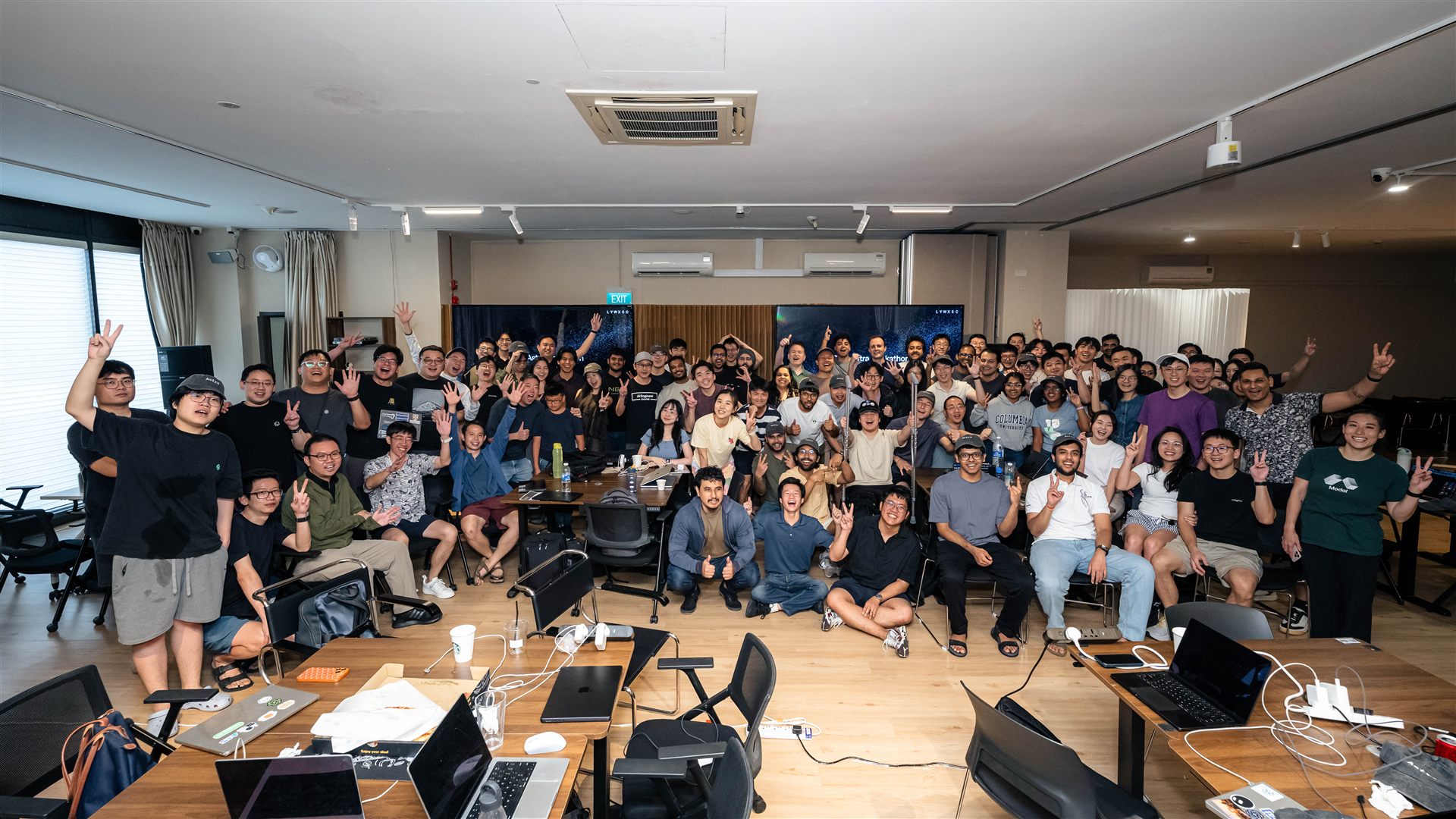
I enjoyed building Forma during the OpenAI Developer Hackathon 2026 weekend with Wonseok Lee. Our team, WC-H, explored a question that feels very relevant to everyday work in architecture and engineering: can we make reviewing a building model as simple as asking a question?
Forma is a small prototype for reviewing Building Information Modeling (BIM) models using text or voice. It connects questions to real Industry Foundation Classes (IFC) data, highlights the relevant elements in 3D, and checks model properties against requirements in Excel schedules.
It is still an early experiment, but I see a promising direction for BIM review, quality assurance and quality control (QA/QC), and design compliance workflows.
Why This Problem?
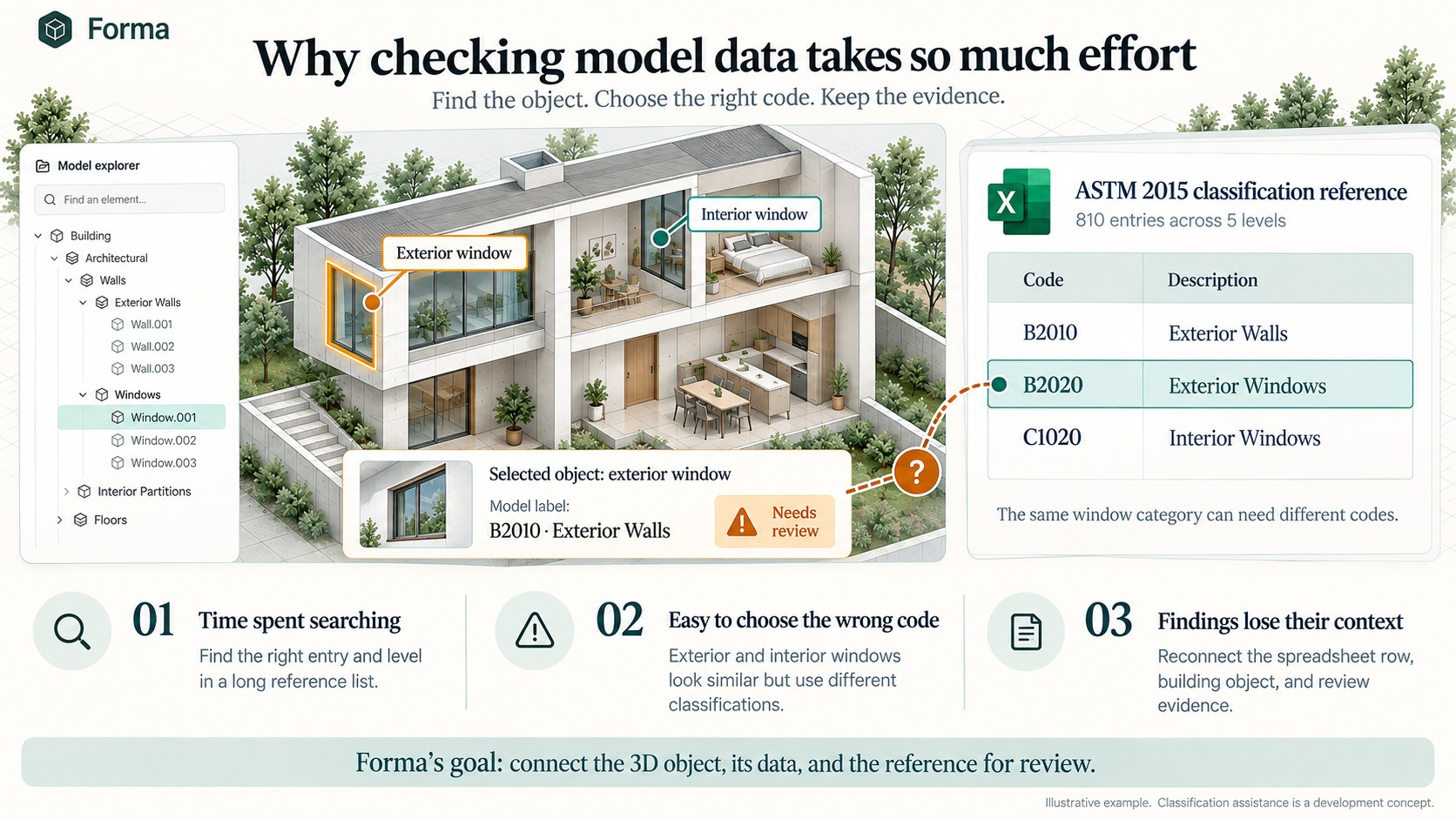
Reviewing a model often means moving between a 3D viewer, property panels, and spreadsheets. A reviewer needs to find the right elements, read their properties, compare them with project requirements, and record anything that needs attention.
Door materials are a good example. Which doors have the expected material? Which ones differ from the schedule? Where is the material information missing? And where are those doors in the building?
Forma brings those questions into one review workflow, with the model and spreadsheet evidence available alongside the findings.
What Forma Does
The prototype focuses on a few connected tasks:
- Ask questions in natural language or voice. Request information from the model without manually searching through every property panel.
- Query real IFC data. Use the building model as the basis for answers.
- Highlight elements in 3D. Connect a result to its location in the model so a reviewer can inspect it in context.
- Check against Excel schedules. Compare IFC door materials with uploaded requirements and flag mismatches or missing information.
- Export traceable findings. Keep a record that helps the team follow up on issues.
Built with Astra
Astra turns review requests into model queries, material checks, and actions in the 3D view. It connects the user's question to the review tools and explains findings using evidence from the model and spreadsheet.
GPT-Live-1 enables voice-driven review. The idea is to let someone talk through a check while looking at the model, keeping the conversation connected to the elements being reviewed.
For example, a reviewer could ask:
Check the door materials against the schedule and show the failures.
The useful part is being able to move from that request to a finding, then to the element and its supporting data.
Video Demo
Watch Forma connect natural-language review requests with IFC model data, Excel requirements, and the 3D model:
A Simple Review Workflow
- Load an IFC model into Forma.
- Ask a question such as “How many doors are in this model? Show them.”
- Upload an Excel door schedule with the expected materials.
- Run the material check and review mismatches or missing information.
- Inspect the highlighted elements in 3D and export the findings for follow-up.
The project README includes a sample workflow and a synthetic door schedule for trying the checks. That schedule demonstrates the review process; it is not a real project's specification.
A Prototype with Room to Grow
The ambition behind Forma is to reduce repetitive manual checking substantially, with a goal of cutting close to 90% of that work in suitable workflows. That is an ambition for the project, rather than a measured result established here. Actual savings will depend on the model quality, the requirements, and the checks being performed.
For now, the prototype gives us a concrete way to explore how AI can help teams catch issues earlier and reduce the risk of rework. Missing information still needs attention, and findings still need a reviewer who understands the project.
Forma supports compliance checks; it does not certify building-code compliance.
Thank You
Many thanks to OpenAI Developers for the credits that supported our project, and to Wonseok for building Forma with me over the hackathon weekend.
For me, this is one of the best parts of a hackathon: taking a practical problem, building something small together, and seeing what becomes possible.
Explore Forma and Support Us
If this direction interests you, please take a look and vote for us!
I would love to hear which model checks take the most time in your own BIM review workflow.